
Low-impact cardio
March in place, perform step jacks, shadow box, or dance. These raise the heart rate while keeping travel and floor impact low.
Rainy day, hot day, ordinary school day
Children can build strength, coordination, balance, mobility, and cardiovascular endurance without a gym. The key is choosing indoor-friendly movements and organizing them into a session that changes pace and uses the whole body.
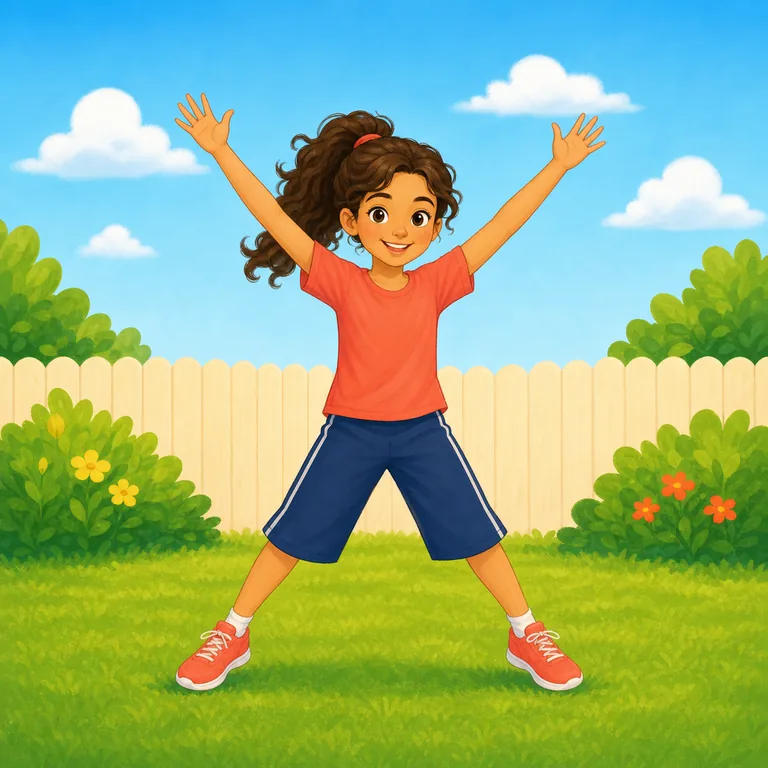
Four ways to move indoors
An indoor routine feels better when it alternates movement types. Repeating only jumping exercises can become noisy and exhausting; repeating only floor exercises can overwork the same muscles. Rotate among these categories instead.
March in place, perform step jacks, shadow box, or dance. These raise the heart rate while keeping travel and floor impact low.
Try flamingo holds, heel-to-toe walks, cross-crawls, or a taped floor ladder. Control matters more than speed.
Squats, wall sits, bird dogs, bridges, and short plank variations can train the whole body in one clear floor area.
Simon Says, mirror movements, freeze dance, and floor-is-lava challenges add decision-making and play.
Sample small-space session
This example keeps children mostly in place and avoids long sprints or broad jumps. Begin with controlled movement, place harder exercises between activities that use different muscles, and reserve the final minutes for slowing down.
For an apartment or upstairs room, substitute step jacks for jumping jacks, calf raises for hops, and marching for running in place. Quiet does not have to mean easy: controlled tempo, balance challenges, and careful holds can still be demanding.
Indoor activity ideas
These examples are already represented in BodeeFit’s exercise collection. The app selects from the collection based on session settings and balances the order for you.
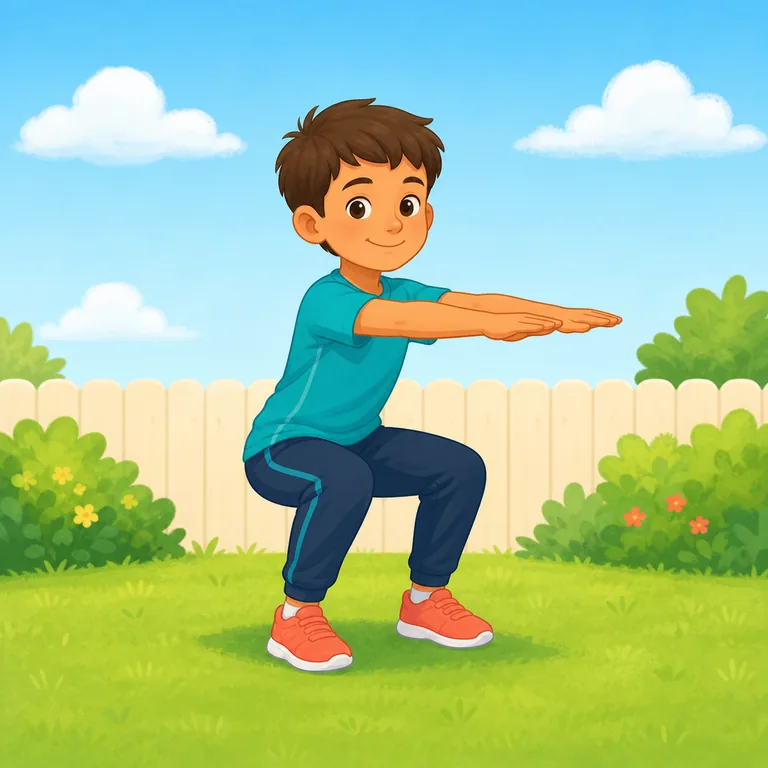
Sit the hips back, keep feet planted, and use a comfortable depth. Pair with an upper-body or coordination activity next.
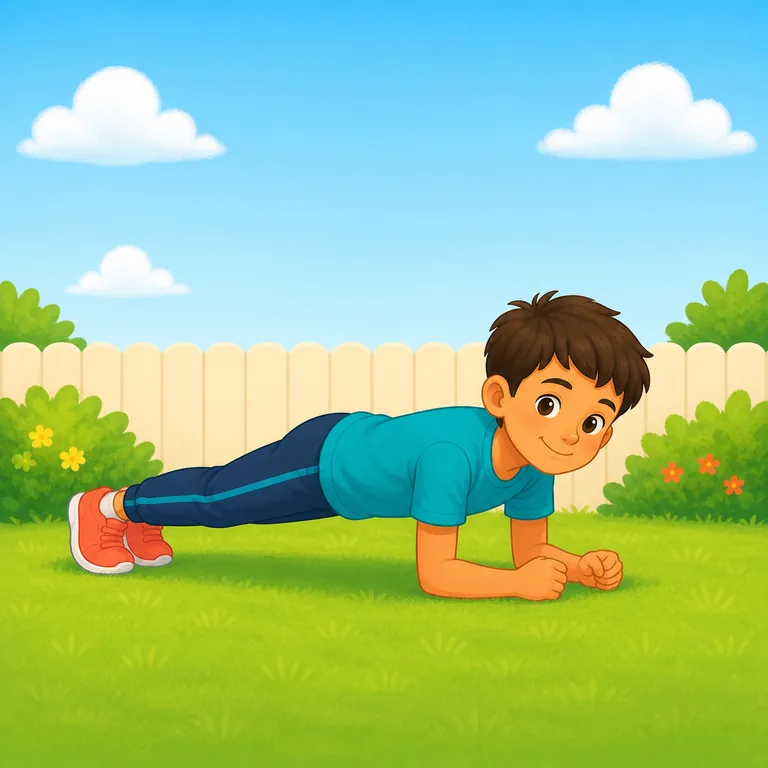
Use brief, high-quality holds instead of treating a long hold as an endurance contest. Knees-down versions are useful modifications.
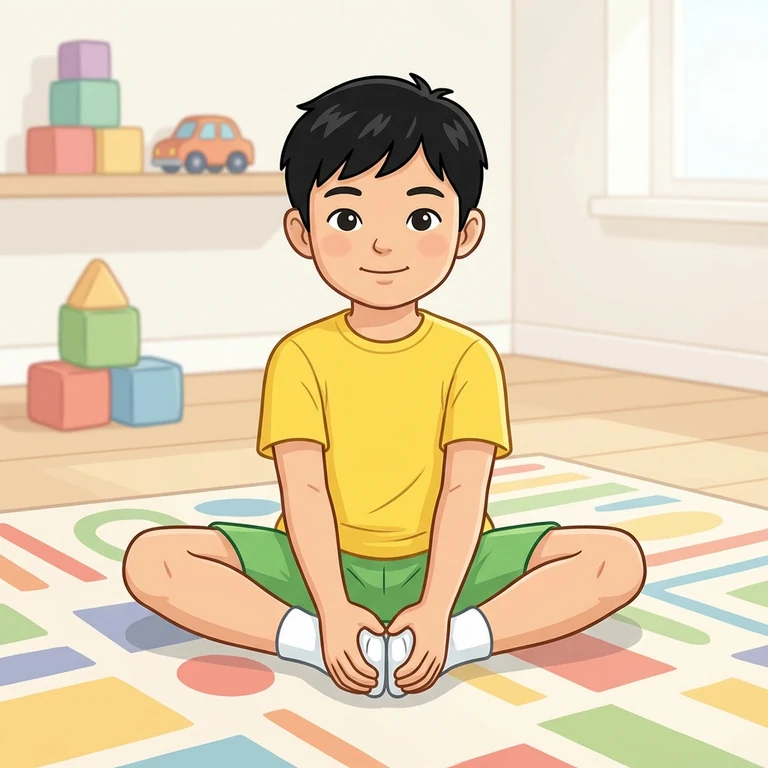
Sit tall, bring the soles of the feet together, and breathe comfortably. Stretching should feel gentle, never forced.
Make the room work for you
Start by thinking vertically and in place. Calf raises, slow squats, standing knee drives, overhead reaches, balance holds, wall push-ups, and resistance-band pull-aparts all require little travel. A single yoga mat can define the boundary for one child.
If several children participate, stagger floor exercises and standing exercises so they are not all moving into the same space. Children can also take turns leading a mirror-movement sequence while siblings follow from their own spots.
BodeeFit’s default “Anywhere (Indoor-friendly)” setting favors activities that can work in common household spaces. Select “Indoor only” when you need to exclude outdoor movement entirely.
Common questions
Yes. Space affects which activities are appropriate, but not whether children can practice strength, balance, coordination, mobility, and cardiovascular work. Adjust impact and pace to the room.
Use marching, step jacks, shadow boxing, controlled knee drives, calf raises, balance work, dancing without jumps, and slower strength exercises.
Alternate focused exercises with playful challenges. Change the session length, enable a dance activity, use a resistance band when available, or regenerate BodeeFit’s plan.
No gym required
Tell BodeeFit how much time you have and choose “Indoor only” or “Anywhere (Indoor-friendly).” The app handles the exercise order, guidance, countdowns, and cooldown.
Build my free indoor routine